A hand-picked selection of the finest Logically Creative or Creatively Logical stories, features, opinions, analysis articles and essays saved from all over the web!
The September 11, 2001, terror attacks by Al Qaeda were meant to harm the United States, and they did, but in ways that Osama bin Laden probably never imagined. President George W. Bush’s response to the attacks compromised America’s basic principles, undermined its economy, and weakened its security.
The attack on Afghanistan that followed the 9/11 attacks was understandable, but the subsequent invasion of Iraq was entirely unconnected to Al Qaeda – as much as Bush tried to establish a link. That war of choice quickly became very expensive – orders of magnitude beyond the $60 billion claimed at the beginning – as colossal incompetence met dishonest misrepresentation.
Indeed, when Linda Bilmes and I calculated America’s war costs three years ago, the conservative tally was $3-5 trillion. Since then, the costs have mounted further. With almost 50% of returning troops eligible to receive some level of disability payment, and more than 600,000 treated so far in veterans’ medical facilities, we now estimate that future disability payments and health-care costs will total $600-900 billion. But the social costs, reflected in veteran suicides (which have topped 18 per day in recent years) and family breakups, are incalculable.
Today, America is focused on unemployment and the deficit. Both threats to America’s future can, in no small measure, be traced to the wars in Afghanistan and Iraq. Increased defense spending, together with the Bush tax cuts, is a key reason why America went from a fiscal surplus of 2% of GDP when Bush was elected to its parlous deficit and debt position today. Direct government spending on those wars so far amounts to roughly $2 trillion – $17,000 for every US household – with bills yet to be received increasing this amount by more than 50%.
Moreover, as Bilmes and I argued in our book The Three Trillion Dollar War, the wars contributed to America’s macroeconomic weaknesses, which exacerbated its deficits and debt burden. Then, as now, disruption in the Middle East led to higher oil prices, forcing Americans to spend money on oil imports that they otherwise could have spent buying goods produced in the US.
But then the US Federal Reserve hid these weaknesses by engineering a housing bubble that led to a consumption boom. It will take years to overcome the excessive indebtedness and real-estate overhang that resulted.
Zeolite-templated carbon is a promising candidate as an electrode material for constructing an electric double layer capacitor with both high-power and high-energy densities, due to its three-dimensionally arrayed and mutually connected 1.2-nm nanopores. This carbon exhibits both very high gravimetric (140−190 F g−1) and volumetric (75−83 F cm−3) capacitances in an organic electrolyte solution. Moreover, such a high capacitance can be well retained even at a very high current up to 20 A g−1. This extraordinary high performance is attributed to the unique pore structure.
In order to develop next-generation electric vehicles, solar energy systems, and other clean energy technologies, researchers need an efficient way to store the energy. One of the key energy storage devices for these applications and others is a supercapacitor, also called an electric double-layer capacitor. In a recent study, scientists have investigated the possibility of using a material called zeolite-templated carbon for the electrode in this type of capacitor, and found that the material’s unique pore structure greatly improves the capacitor's overall performance.
To store energy, the electric double-layer capacitor is charged by ions that migrate from a bulk solution to an electrode, where they are adsorbed. Before reaching the electrode’s surface, the ions have to travel through narrow nanopores as quickly and efficiently as possible. Basically, the quicker the ions can travel down these paths, the quicker the capacitor can be charged, resulting in a high rate performance. Also, the greater the adsorbed ion density in the electrode, the greater the charge that the capacitor can store, resulting in a high volumetric capacitance.
Recently, scientists have been testing materials with pores of various sizes and structures to try to achieve both quick ion transport and high adsorption ion density. But the two requirements are somewhat contradictory, since ions can travel more quickly through larger nanopores, but large nanopores make the electrode density low and thus decrease the adsorbed ion density.
The zeolite-templated carbon consists of nanopores that are 1.2 nm in diameter (smaller than most electrode materials) and that have a very ordered structure (whereas other pores can be disordered and random). The nanopores’ small size makes the adsorbed ion density high, while the ordered structure – described as a diamond-like framework – allows the ions to quickly pass through the nanopores. In a previous study, the researchers showed that zeolite-templated carbon with nanopores smaller than 1.2 nm cannot enable fast ion transport, suggesting that this size may provide the optimal balance between high rate performance and high volumetric capacitance.
In tests, the zeolite-templated carbon’s properties exceeded those of other materials, demonstrating its potential to be used as an electrode for high-performance electric double-layer capacitors.
More information: Hiroyuki Itoi, et al. “Three-Dimensionally Arrayed and Mutually Connected 1.2-nm Nanopores for High-Performance Electric Double Layer Capacitor.” Journal of the American Chemical Society. DOI:10.1021/ja108315p
Matt Zoller Seitz @ Salon.com says that the planned NBC version of the brilliant "Prime Suspect" shows why network TV shouldn't mess with great imports.
Prime Suspect, Jane Tennison (Helen Mirren)
Pictured: Maria Bello as Det. Jane Timoney
The idea of remaking the story of Detective Chief Inspector Jane Tennison (Helen Mirren) for American network TV seems wrongheaded. The problem is the venue. The U.S. broadcast TV model -- with its 42-minutes-a-week, 22-weeks-a-year format, frequent commercial interruptions, and still-oppressive content restrictions -- is the enemy of every fine quality that the original "Prime Suspect" possessed.
More important, American TV is averse to letting race, class, politics and other touchy elements drive stories because it might make viewers and sponsors skittish. That's why the American crime show's favorite bad guy is the serial killer, a mythologically exaggerated monster whose existence lets filmmakers titillate and terrify while declining to engage with society at large.
Jane Tennison never dealt with effete, wisecracking, Hannibal Lecter-type bogeymen. She lived in reality. Over 15 years,"Prime Suspect" dealt frankly with sex, sexism, race, class and the intrusion of politics into police work. It did so subtly, prizing plausibility and never delivering a jolt without reason. And it treated time as an ally instead of an enemy. One of the pleasures of "Prime Suspect" was the opportunity to re-engage with it after a long break and discover that Tennison had risen in rank or settled into a new job or a new relationship. The gaps between installments enhanced the sense that you were seeing excerpts from a life in progress.
You can't do any of that on NBC. You can't re-create or even approximate "Prime Suspect" in a commercial broadcast network series that airs 22 episodes a year. The material can't breathe in the same way. And forget about being unflinching. What passes for unflinching on NBC is "Law & Order: Criminal Intent," an entertaining but mostly absurd procedural that bears about as much qualitative relation to "Prime Suspect" as "Training Day" does to "Serpico." And don't even get me started on TNT's "The Closer," a fitfully entertaining series that has wrongheadedly been described as an American answer to "Prime Suspect," presumably because its main character is a strong-willed female detective. (It's not a subtle psychological drama, it's a suck-up-to-the-star spectacle about a mercurial Southern belle following her muse and dazzling the nonbelievers. "Prime Suspect" writes in plain script, "The Closer" in big block letters.) Not many American cop shows, broadcast or cable, have engaged with reality as directly as "Prime Suspect" -- and the best of those were produced not in Hollywood, but in Baltimore: "Homicide: Life on the Street," "The Corner," and "The Wire."
My friend Keith Uhlich, a Time Out New York film critic and a devotee of series TV, has a theory that broadcast network shows provide viewers with two sources of drama. One is the conflict between characters. The other is the conflict between the series and the system that produces it.
When we watched the Fox network series "The X-Files," for example, the main draw was Fox Mulder and Dana Scully vs. a vast and unknowable conspiracy. The secondary draw was series creator Chris Carter and company vs. the Fox network and the network TV assembly line generally. Every time you watched that series -- or "NYPD Blue," or "Lost," or "24" or "ER" any other U.S. network program of note -- there was an extra-dramatic sense of anticipation. You wanted to see if the writers would manage to transcend network content restrictions, format limitations, behind-the-scenes meddling by executives and sponsors -- not to mention the pitiless pressure of having to churn out 22 episodes a year even if they didn't have enough stories to justify it -- and produce great TV. Or just good TV.
As new cases of autism have exploded in recent years—some form of the condition affects about one in 110 children today—efforts have multiplied to understand and accommodate the condition in childhood. But children with autism will become adults with autism, some 500,000 of them in this decade alone. What then? Meet Donald Gray Triplett, 77, of Forest, Mississippi. He was the first person ever diagnosed with autism. And his long, happy, surprising life may hold some answers.
By John Donvan and Caren Zucker
Image credit: Miller Mobley/Redux
In 1951, a Hungarian-born psychologist, mind reader, and hypnotist named Franz Polgar was booked for a single night’s performance in a town called Forest, Mississippi, at the time a community of some 3,000 people and no hotel accommodations. Perhaps because of his social position—he went by Dr. Polgar, had appeared in Life magazine, and claimed (falsely) to have been Sigmund Freud’s “medical hypnotist”—Polgar was lodged at the home of one of Forest’s wealthiest and best-educated couples, who treated the esteemed mentalist as their personal guest.
Polgar’s all-knowing, all-seeing act had been mesmerizing audiences in American towns large and small for several years. But that night it was his turn to be dazzled, when he met the couple’s older son, Donald, who was then 18. Oddly distant, uninterested in conversation, and awkward in his movements, Donald nevertheless possessed a few advanced faculties of his own, including a flawless ability to name musical notes as they were played on a piano and a genius for multiplying numbers in his head. Polgar tossed out “87 times 23,” and Donald, with his eyes closed and not a hint of hesitation, correctly answered “2,001.”
Indeed, Donald was something of a local legend. Even people in neighboring towns had heard of the Forest teenager who’d calculated the number of bricks in the facade of the high school—the very building in which Polgar would be performing—merely by glancing at it.
According to family lore, Polgar put on his show and then, after taking his final bows, approached his hosts with a proposal: that they let him bring Donald with him on the road, as part of his act.
Donald’s parents were taken aback. “My mother,” recalls Donald’s brother, Oliver, “was not at all interested.” For one, things were finally going well for Donald, after a difficult start in life. “She explained to [Polgar] that he was in school, he had to keep going to classes,” Oliver says. He couldn’t simply drop everything for a run at show business, especially not when he had college in his sights.
But there was also, whether they spoke this aloud to their guest or not, the sheer indignity of what Polgar was proposing. Donald’s being odd, his parents could not undo; his being made an oddity of, they could, and would, prevent. The offer was politely but firmly declined.
What the all-knowing mentalist didn’t know, however, was that Donald, the boy who missed the chance to share his limelight, already owned a place in history. His unusual gifts and deficits had been noted outside Mississippi, and an account of them had been published—one that was destined to be translated and reprinted all over the world, making his name far better-known, in time, than Polgar’s.
His first name, anyway.
Video: The authors reveal how they tracked down Donald and discuss the significance of his long, happy life.
Donald was the first child ever diagnosed with autism. Identified in the annals of autism as “Case 1 … Donald T,” he is the initial subject described in a 1943 medical article that announced the discovery of a condition unlike “anything reported so far,” the complex neurological ailment now most often called an autism spectrum disorder, or ASD. At the time, the condition was considered exceedingly rare, limited to Donald and 10 other children—Cases 2 through 11—also cited in that first article.
That was 67 years ago. Today, physicians, parents, and politicians regularly speak of an “epidemic” of autism. The rate of ASDs, which come in a range of forms and widely varying degrees of severity—hence spectrum—has been accelerating dramatically since the early 1990s, and some form of ASD is now estimated to affect one in every 110 American children. And nobody knows why.
There have always been theories about the cause of autism—many theories. In the earliest days, it was an article of faith among psychiatrists that autism was brought on by bad mothers, whose chilly behavior toward their children led the youngsters to withdraw into a safe but private world. In time, autism was recognized to have a biological basis. But this understanding, rather than producing clarity, instead unleashed a contentious debate about the exact mechanisms at work. Differing factions argue that the gluten in food causes autism; that the mercury used as a preservative in some vaccines can trigger autistic symptoms; and that the particular measles-mumps-rubella vaccine is to blame. Other schools of thought have portrayed autism as essentially an autoimmune response, or the result of a nutritional deficiency. The mainstream consensus today—that autism is a neurological condition probably resulting from one or more genetic abnormalities in combination with an environmental trigger—offers little more in the way of explanation: the number of genes and triggers that could be involved is so large that a definitive cause, much less a cure, is unlikely to be determined anytime soon. Even the notion that autism cases are on the rise is disputed to a degree, with some believing that the escalating diagnoses largely result from a greater awareness of what autism looks like.
There is no longer much dispute, however, about the broad outlines of what constitutes a case of autism. The Diagnostic and Statistical Manual of Mental Disorders—the so-called bible of psychiatry—draws a clear map of symptoms. And to a remarkable degree, these symptoms still align with those of one “Donald T,” who was first examined at Johns Hopkins University, in Baltimore, in the 1930s, the same boy who would later amaze a mentalist and become renowned for counting bricks.
In subsequent years, the scientific literature updated Donald T’s story a few times, a journal entry here or there, but about four decades ago, that narrative petered out. The later chapters in his life remained unwritten, leaving us with no detailed answer to the question Whatever happened to Donald?
There is an answer. Some of it we turned up in documents long overlooked in the archives of Johns Hopkins. But most of it we found by tracking down and spending time with Donald himself. His full name is Donald Gray Triplett. He’s 77 years old. And he’s still in Forest, Mississippi. Playing golf.
The question that haunts every parent of a child with autism is What will happen when I die? This reflects a chronological inevitability: children with autism will grow up to become adults with autism, in most cases ultimately outliving the parents who provided their primary support.
Then what?
It’s a question that has yet to grab society’s attention, as the discussion of autism to date has skewed, understandably, toward its impact on childhood. But the stark fact is that an epidemic among children today means an epidemic among adults tomorrow. The statistics are dramatic: within a decade or so, more than 500,000 children diagnosed with autism will enter adulthood. Some of them will have the less severe variants—Asperger’s syndrome or HFA, which stands for “high-functioning autism”—and may be able to live more independent and fulfilling lives. But even that subgroup will require some support, and the needs of those with lower-functioning varieties of autism will be profound and constant.
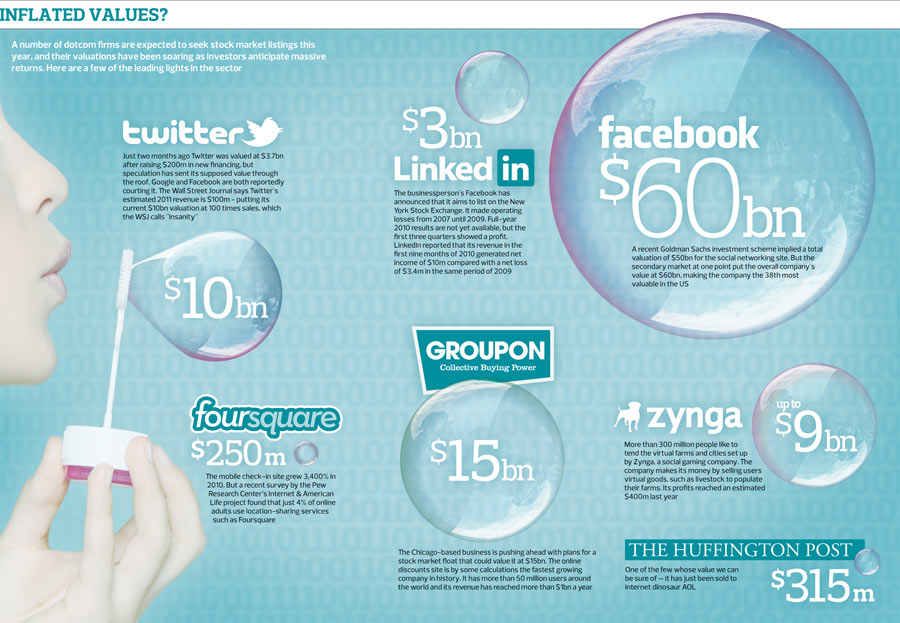
Among those benefits are entrepreneurial risk-taking and the animal spirits of innovation. "I do not feel confident that a policy which, in the pursuit of stability of prices, output, and employment, had nipped in the bud the railway boom of the forties, or the American railway boom of 1869-71, or the German electrical boom of the [1890s], would have been on balance beneficial to the populations concerned," wrote the British economist Dennis Robertson in 1926. Arthur Rolnick, former head of research at the Federal Reserve Bank of Minneapolis and currently senior fellow at the Humphrey Institute of Public Affairs, agrees with the Robertsonian point of view: "Sure, there's speculation, but this is how we want markets to work," Rolnick says. "It's the way we innovate and bring new products to market."
Not all innovations are desirable, of course, as we've seen recently. Much of the whiz-bang financial technology that made the housing bubble possible turned out to be toxic. Still, even if economists can agree on a set of statistical guideposts for determining the madness of crowds, monetary policy is often too blunt a policy instrument. Sure, the Fed can always pop a bubble by sharply hiking the fed funds rate. But that will also stymie angel investors, venture capitalists, and other intrepid investors from funding profitable ideas bubbling up from university labs and corporate research departments.
"The Fed raising the fed funds rate to deal with a bubble in one sector of the economy isn't very smart," says David Laidler, economist at the University of Western Ontario. "Whether the problem is in high tech or in housing, you're using an economy-wide instrument to deal with it, which isn't wise."
THE CANADIAN MODEL
The solution, many economists agree, is for the Fed to place a far greater emphasis on regulatory initiative than monetary policy when confronting bubbles.
Take the new mortgage rules announced by Canadian finance minister Jim Flaherty on Jan. 17. For the second time in less a year, the Canadian government acted to lean against ballooning consumer debt in a low interest rate environment to "protect the stability of the economy." In sharp contrast, when the stock market entered nosebleed territory in the late 1990s, the Fed ignored calls to raise margin requirements in the stock market, a targeted regulatory move.
During the real estate bubble, federal regulators had plenty of tools at their disposable to cut short the widespread abuses. Edward Gramlich, the late Federal Reserve governor, repeatedly warned about abuses in the subprime mortgage market and urged that the Greenspan Fed unleash investigators on lenders trolling for customers in poor neighborhoods and examine in detail their relations with major financial institutions. The Greenspan Fed, enamored with the elixir of deregulation, ignored his advice. "Regulators didn't do their job," says Rolnick.
Indeed, the Securities & Exchange Commission should step up its scrutiny of private investors and company valuations in the growing trading market for private share offerings of such marquee high-tech companies as Facebook, Twitter, and LinkedIn. Even more important, the Fed needs to exercise the extra oversight powers it got in the Frank-Dodd financial services reform legislation last July. (And Congress should avoid watering down the rules and regulations.)
Here's the thing: Plenty of mobile Internet companies, social networking firms, and other information technology companies will get funded over the next few years. Many of them will fail. That's capitalism. Regulators need to concentrate on preventing major financial institutions from feeding the frenzy and putting the taxpayer at risk. That's regulatory prudence. Stay tuned.
"If, say, one per cent of red dwarfs have an Earth-like planet around them, this one percent now applies to a number that is three times larger than we had so far assumed."
This photo taken by the Hubble Space Telescope shows a cluster of diverse galaxies / AP Source: AP
THE Universe might hold three times as many stars as was previously thought, a new cosmic census of eight galaxies beyond the Milky Way suggested.
US astronomers said that they discovered that small, dim stars known as red dwarfs are more plentiful than previously estimated.
"A best guess at the total number of stars in the universe is about 100 sextillion -- that is, a '1' followed by 23 zeros. We now believe this estimate is perhaps too low by a factor of about three," said Dr Pieter van Dokkum, of Yale University, who led the research.
Even that estimate remains uncertain, he added, because scientists do not know with confidence how many galaxies there are in the universe.
The findings, published in the journal Nature, also boosted the potential for other planets.
"There are possibly trillions of Earths orbiting these stars," Dr van Dokkum said.
The revised estimate of 300 sextillion stars in the universe emerged from a study of eight elliptical galaxies that are between 50 million and 300 million light years away.
In previous observations of the galaxies, it was impossible to detect red dwarf stars, as they are only about one-tenth of the mass of the sun and 1000 times fainter.
Powerful new instruments at the Keck Observatory in Hawaii allowed Dr van Dokkum's team to work out that the proportion of red dwarfs in elliptical galaxies is about 20 times greater than in the Milky Way.
Kids sleeping late on the weekends? Let ‘em — they're not being lazy; they're cutting their risk of obesity, according to new research published online today in the journal Pediatrics.
Ideally, parents should strive for a constant bedtime and wake time. But since that's not always realistic, it's good to know that children who catch up on sleep during weekends and vacations are better able to counteract the adverse effects of insufficient sleep during the week and reduce their risk of obesity.
Researchers at the University of Chicago analyzed the sleep patterns and BMI of 308 children between the ages of 4 to 10, dividing them into nine groups and using wrist actigraphs for one week to determine when they were asleep. The group of children with normal sleep patterns had the lowest risk of obesity and metabolic complications.
On average, the children slept an average of eight hours each night, less than what they should be getting. Kids ages 5 to 8 should sleep 9 to 10 hours, but children — like adults in our society — are largely sleep-deprived.
“We tend to disrespect sleep,” says David Gozal, the lead author and chair of the pediatrics department at the University of Chicago. “We're not aware there's a very substantial price to pay for shortening the duration of sleep and for creating very irregular sleep schedules. Together, these create a much higher risk of obesity."
The worst combination? Irregular sleep and not enough of it. Those kids with the shortest, most irregular sleep had a 4.2-fold increased risk of obesity. When this group got more sleep on the weekends, their risk decreased to 2.8 fold — better but still nowhere near as good as the normal sleepers.
The obese kids in the study slept less time and more irregularly on weekends and were less likely to compensate on the weekends for not getting enough sleep on weekdays, which added up to metabolic problems. Short, irregular sleep increased the risk of inflammation, glucose sensitivity and resulted in a rise in lipids.
“The point is regularity,” says Gozal. “If you are a regular catch-up sleeper on the weekends, that can have a beneficial effect if you are a short sleeper during the week. But if you have irregular, short/long sleep during the week and you continue that during the weekend, that puts you at worse risk.”
There's plenty of buzz about childhood obesity but not much chatter about the importance of sleep, says Gozal. Educating families about the significance of sleep through public health campaigns that emphasize the link could breed healthier kids.
“The best thing to globally reduce the risk for obesity is to sleep long during the week and during the weekend and have regular sleep,” says Gozal.
Human exploration is the most visible use of spaceflight, but business and defense satellites fill the sky.
The retirement of the space shuttles marks the end of NASA's human spaceflight program, at least for now. But human missions funded by the U.S. government have represented only a small part of the action in space.
Of the 7,000 spacecraft that have been launched into orbit or beyond, more than half were defense satellites used for such purposes as communication, navigation, and imaging. (The Soviet Union sent up a huge number, partly because its satellites tended to be much shorter-lived than those from the United States.) In the 1970s, private companies began increasingly adding to the mix, launching satellites for telecommunications and broadcasting.
This graphic groups payloads by the nationality of the owner. A satellite, a capsule of cosmonauts, or a deep-space probe would each count as one payload. The data, which run through July 2011, were drawn from hundreds of sources, including space agency documents, academic journals, and interviews. They were compiled by Jonathan McDowell, an astrophysicist at the Harvard-Smithsonian Center for Astrophysics and author of Jonathan's Space Report, a newsletter that tracks launches.
The Scuderi engine could substantially improve fuel consumption by storing compressed air.
BY KEVIN BULLIS
$50 million engine: It took Scuderi Group most of the $65 million it’s raised so far to develop just one engine, the prototype shown here. It’s a split-cycle two-cylinder engine, in which one cylinder compresses air and the other combusts a fuel-air mixture.
Credit: Scuderi
Scuderi's Split-Cycle EngineScuderi Group
An engine development company called the Scuderi Group recently announced progress in its effort to build an engine that can reduce fuel consumption by 25 to 36 percent compared to a conventional design. Such an improvement would be roughly equal to a 50 percent increase in fuel economy.
Sal Scuderi, president of theScuderi Group, which has raised $65 million since it was founded in 2002, says that nine major automotive companies have signed nondisclosure agreements that allow them access to detailed data about the engine. Scuderi says he is hopeful that at least one of the automakers will sign a licensing deal before the year is over. Historically, major automakers have been reluctant to license engine technology because they prefer to develop the engines themselves as the core technology of their products. But as pressure mounts to meet new fuel-economy regulations, automakers have become more interested in looking at outside technology.
A conventional engine uses a four stroke cycle: air is pulled into the chamber, the air is compressed, fuel is added and a spark ignites the mixture, and finally the combustion gases are forced out of the cylinder. In the Scuderi engine, known as a split-cycle engine, these functions are divided between two adjacent cylinders. One cylinder draws in air and compresses it. The compressed air moves through a tube into a second cylinder, where fuel is added and combustion occurs.
Splitting these functions gives engineers flexibility in how they design and control the engine. In the case of the Scuderi engine, there are two main changes from what happens in a conventional internal-combustion engine. The first is a change to when combustion occurs as the piston moves up and down in the cylinder. The second is the addition of a compressed-air storage tank.
Volunteers experienced the virtual bodies as if they were their own, with possible applications in computer games or to transport people digitally to other locations
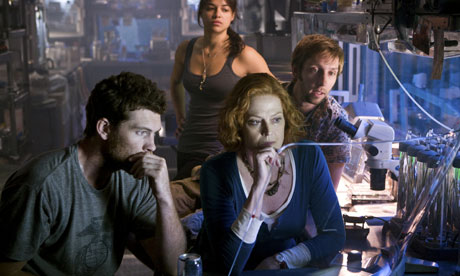
In the film Avatar, human minds are transferred into synthetic bodies. Photograph: Sportsphoto Ltd./Allstar
In the film Avatar, explorers on the planet Pandora transmit their minds into alternative bodies. Now scientists have come a step closer to recreating the experience in the lab.
They have successfully "projected" people into digital avatars that can move around a virtual environment. The participants experienced the digital body as if it were their own, even if the virtual humans were of the opposite sex.
The research is aimed at understanding how the brain integrates information coming from the senses in order to determine the position of the body in space. But the results could also be used in next generation computer games or for people who want to transport themselves, digitally, to other locations.
Olaf Blanke, a neurologist with the Brain Mind Institute at Ecole Polytechnique Fédérale de Lausanne in Switzerland, who led the work, used a virtual-reality (VR) setup with cameras linked to a head-mounted video display to achieve his results. He presented his work on Thursday at the annual meeting of the American Association for the Advancement of Science.
It is an extension of previous work by the same researchers that aims to recreate out-of-body experiences. These are defined as situations where a person who is awake sees their own body from somewhere outside themselves. This can occur when brain function has been damaged through a stroke, epilepsy or drug abuse. The most common cases happen in traumatic events such as car accidents or during operations.
In those experiments, carried out by Blanke and colleagues in 2007, volunteers wore goggles containing a video screen for each eye fed fed by a pair of cameras behind the participant. Because the two images were combined by the brain into a single image, they saw a 3D image of their own back.
Experimenters then moved a plastic rod towards a location just below the cameras, in their field of view, while the participant's real chest was simultaneously touched in the corresponding position. The participants reported feeling that they were located where the cameras had been placed, watching a body in front of them that belonged to someone else.
John Sculley, Apple Computer: Throwing out Steve Jobs
In 1985, Apple Computer was in the midst of a technology transition. In the previous year, the company had just launched its first Macintosh computer, which had replaced the Apple ][ and Apple III line it had been selling successfully for the last several years.
Founder Steve Jobs had recruited former Pepsi-Cola executive John Sculley to act as Apple's CEO, in order to help grow the company. While Jobs was considered to be a charismatic and dynamic employee at Apple and at the Macintosh division which was under his direct leadership, he was also erratic, difficult to work with and temperamental, and it was beginning to put a strain on his relationship with his team members as well as on the Board of Directors of the company.
Facing a sales slump due to overwhelming competition from companies like IBM and Compaq that were selling PCs and clones, Jobs' relationship with Sculley deteriorated which resulted in his ouster from the company he and Steve Wozniak founded.
The 11-year period that Apple continued on without Steve Jobs is universally considered to be a major low point for the company. Without Jobs' vision and guidance, innovation slowed and Apple underwent several leadership changes. Revenue and stock valuation plummeted, the company was on the verge of financial oblivion, and by the mid 1990's the company was in desperate need for a replacement to the aging Macintosh OS.
In 1996, Apple purchased Steve Jobs' NeXT, which would serve as the foundation for what would become OS X and later on the iOS which powers the iPhone and iPad. Gil Amelio, the current CEO, was ousted in 1997 in a boardroom coup and Steve Jobs returned as Chairman and CEO.
Jobs would guide the company into the release of the iMac, the iPod, OSX and and x86-based Macs, and then later the iPhone, iPad and Apple TV, ushering in a new golden age for Apple.
ScienceDaily — Imagine a material that's stronger than steel, but just as versatile as plastic, able to take on a seemingly endless variety of forms. For decades, materials scientists have been trying to come up with just such an ideal substance, one that could be molded into complex shapes with the same ease and low expense as plastic but without sacrificing the strength and durability of metal.
Jan Schroers and his team have developed novel metal alloys that can be blow molded into virtually any shape. (Credit: Image courtesy of Yale University)
Now a team led by Jan Schroers, a materials scientist at Yale University, has shown that some recently developed bulk metallic glasses (BMGs)-metal alloys that have randomly arranged atoms as opposed to the orderly, crystalline structure found in ordinary metals-can be blow molded like plastics into complex shapes that can't be achieved using regular metal, yet without sacrificing the strength or durability that metal affords. Their findings are described online in the current issue of the journal Materials Today.
"These alloys look like ordinary metal but can be blow molded just as cheaply and as easily as plastic," Schroers said. So far the team has created a number of complex shapes-including seamless metallic bottles, watch cases, miniature resonators and biomedical implants-that can be molded in less than a minute and are twice as strong as typical steel.
The materials cost about the same as high-end steel, Schroers said, but can be processed as cheaply as plastic. The alloys are made up of different metals, including zirconium, nickel, titanium and copper.
The team blow molded the alloys at low temperatures and low pressures, where the bulk metallic glass softens dramatically and flows as easily as plastic but without crystallizing like regular metal. It's the low temperatures and low pressures that allowed the team to shape the BMGs with unprecedented ease, versatility and precision, Schroers said. In order to carefully control and maintain the ideal temperature for blow molding, the team shaped the BMGs in a vacuum or in fluid.
"The trick is to avoid friction typically present in other forming techniques," Schroers said. "Blow molding completely eliminates friction, allowing us to create any number of complicated shapes, down to the nanoscale."
Schroers and his team are already using their new processing technique to fabricate miniature resonators for microelectromechanical systems (MEMS)-tiny mechanical devices powered by electricity-as well as gyroscopes and other resonator applications.
In addition, by blow molding the BMGs, the team was able to combine three separate steps in traditional metal processing (shaping, joining and finishing) into one, allowing them to carry out previously cumbersome, time- and energy-intensive processing in less than a minute.
"This could enable a whole new paradigm for shaping metals," Schroers said. "The superior properties of BMGs relative to plastics and typical metals, combined with the ease, economy and precision of blow molding, have the potential to impact society just as much as the development of synthetic plastics and their associated processing methods have in the last century."
Other authors of the paper include Thomas M. Hodges and Golden Kumar (Yale University); Hari Raman and A.J. Barnes (SuperformUSA); and Quoc Pham and Theodore A. Waniuk (Liquidmetal Technologies).
Journal Reference:
Jan Schroers, Thomas M. Hodges, Golden Kumar, Hari Raman, Anthony J. Barnes, Quoc Pham, Theodore A. Waniuk.Thermoplastic blow molding of metals.Materials Today, 2011; 14 (1-2): 14 DOI:10.1016/S1369-7021(11)70018-9
Cassiopeia A is the remnant of a once massive star that died in a violent supernova explosion. Picture: NASA Source: Supplied
THE legend that a bright star accompanied the birth of English King Charles II, which was thought to be a portent of a powerful monarch, has been proven by scientists.
One of the abiding legends of Britain's royal family is that the noon-day star appeared at Charles II's birth in 1630, who was to restore the English monarchy after the execution of his father.
"The Most Glorious Star... shining most brightly in a Miraculous manner in the Face of the Sun," was how an English writer, Edward Matthew, described the supposed event in a 1661 pamphlet.
"Never any Starre had appeared before at the birth of any (the Highest humane Hero) except our Saviour."
Accounts of the "royal star" have often been written off by historians as propaganda, coloured with Christ-like ornamentation, to cement Charles II's claim to the throne after his father had been overthrown.
But new evidence, to be put to a meeting of Britain's Royal Astronomical Society (RAS) today, suggests that a new star did in fact attend the royal birth.
The star could have been a supernova called Cassiopeia A, say Martin Lunn, former curator of astronomy at the Yorkshire Museum in northern England, and Lila Rakoczy, a US-based independent scholar.
Cassiopeia A was a massive star that eventually collapsed in upon itself and blew apart. Its dramatic flare of light took 11,000 years to cross the cosmos, finally reaching Earth in the 17th century, they say.
Today, the former star is familiar to every radio-astronomer as a seething X-ray ember that is no longer visible to the naked eye.
Numerous but sketchy sources point to a celestial sighting in the 17th century, according to the researchers. These observations, though, stretch over 30 years and cluster in the latter part of the century.
Lunn and Rakoczy take a new look at the evidence and calculate that the supernova could indeed have been seen on May 29, 1630, the day when the future Charles II was born.
"The number and variety of sources that refer to the new star strongly suggest that an astronomical event really did take place," Lunn said.
"Our work raises questions about the current method for dating supernovae, but leads to the exciting possibility of solving a decades-old astronomical puzzle."
The idea is being presented at an RAS conference in Llandudno, Wales, gathering around 500 astronomers and space scientists, the Society said in a press release.
The 1642-1651 English civil war focussed on a revolt by parliament against the monarch's claim to have a divine right to rule.
The parliamentary forces, known as Roundheads, executed King Charles I in 1649 and routed the army of his son in 1651.
Charles II returned from exile in 1660 and became dubbed "the Merry Monarch" for his pleasure-loving ways after the era of puritanism.
But he accepted that the monarch reigns with the consent of parliament, the principle that underpins British democracy today.
In 2006, a team of astronomers estimated that a "guest star" noted by Chinese chroniclers in 185 AD was a supernova whose remnants, RCW 86, still glow today in non-visible parts of the energy spectrum.
A supernova spotted in 1572 by the Danish astronomer Tycho Brahe lingered for 18 months.
Its appearance was traumatic for many astronomers at the time, for it destroyed the notion, set in stone by Aristotle, that the Universe was fixed and unchanged. It reputedly was the inspiration for the terrifying celestial portent in Shakespeare's "Hamlet".
by Brian May [founding member of Queen] @ googleblog.blogspot.com
I was first introduced to Freddie Mercury—a paradoxically shy yet flamboyant young man—at the side of the stage at one of our early gigs as the group “SMILE.” He told me he was excited by how we played, he had some ideas—and he could sing! I'm not sure we took him very seriously, but he did have the air of someone who knew he was right. He was a frail but energised dandy, with seemingly impossible dreams and a wicked twinkle in his eye. A while later we had the opportunity to actually see him sing ... and it was scary! He was wild and untutored, but massively charismatic. Soon, he began his evolution into a world-class vocal talent, right in front of our eyes.
Freddie was fully focused, never allowing anything or anyone to get in the way of his vision for the future. He was truly a free spirit. There are not many of these in the world. To achieve this, you have to be, like Freddie, fearless—unafraid of upsetting anyone's apple cart. Some people imagine Freddie as the fiery, difficult diva who required everyone around him to compromise. No. In our world, as four artists attempting to paint on the same canvas, Freddie was always the one who could find the compromise—the way to pull it through. If he found himself at odds with any one of us, he would quickly dispel the cloud with a generous gesture, a wisecrack or an impromptu present. I remember one morning after a particularly tense discussion he presented me with a cassette. He had been up most of the night compiling a collage of my guitar solos. "I wanted you to hear them as I hear them, dear," he said. "They're all fab, so I made them into a symphony!" To create with Freddie was always stimulating to the max. He was daring, always sensing a way to get outside the box. Sometimes he was too far out ... and he'd usually be the first to realise it. With a conspiratorial smile he would say "Oh ... did I lose it, dears?!" But usually there was sense in his nonsense—art in his madness. It was liberating. I think he encouraged us all in his way, to believe in our own madness, and the collective mad power of the group Queen. Freddie would have been 65 this year, and even though physically he is not here, his presence seems more potent than ever. Freddie made the last person at the back of the furthest stand in a stadium feel that he was connected. He gave people proof that a man could achieve his dreams—made them feel that through him they were overcoming their own shyness, and becoming the powerful figure of their ambitions. And he lived life to the full. He devoured life. He celebrated every minute. And, like a great comet, he left a luminous trail which will sparkle for many a generation to come. Happy birthday Freddie! Posted by Dr. Brian May, CBE. Guitarist.
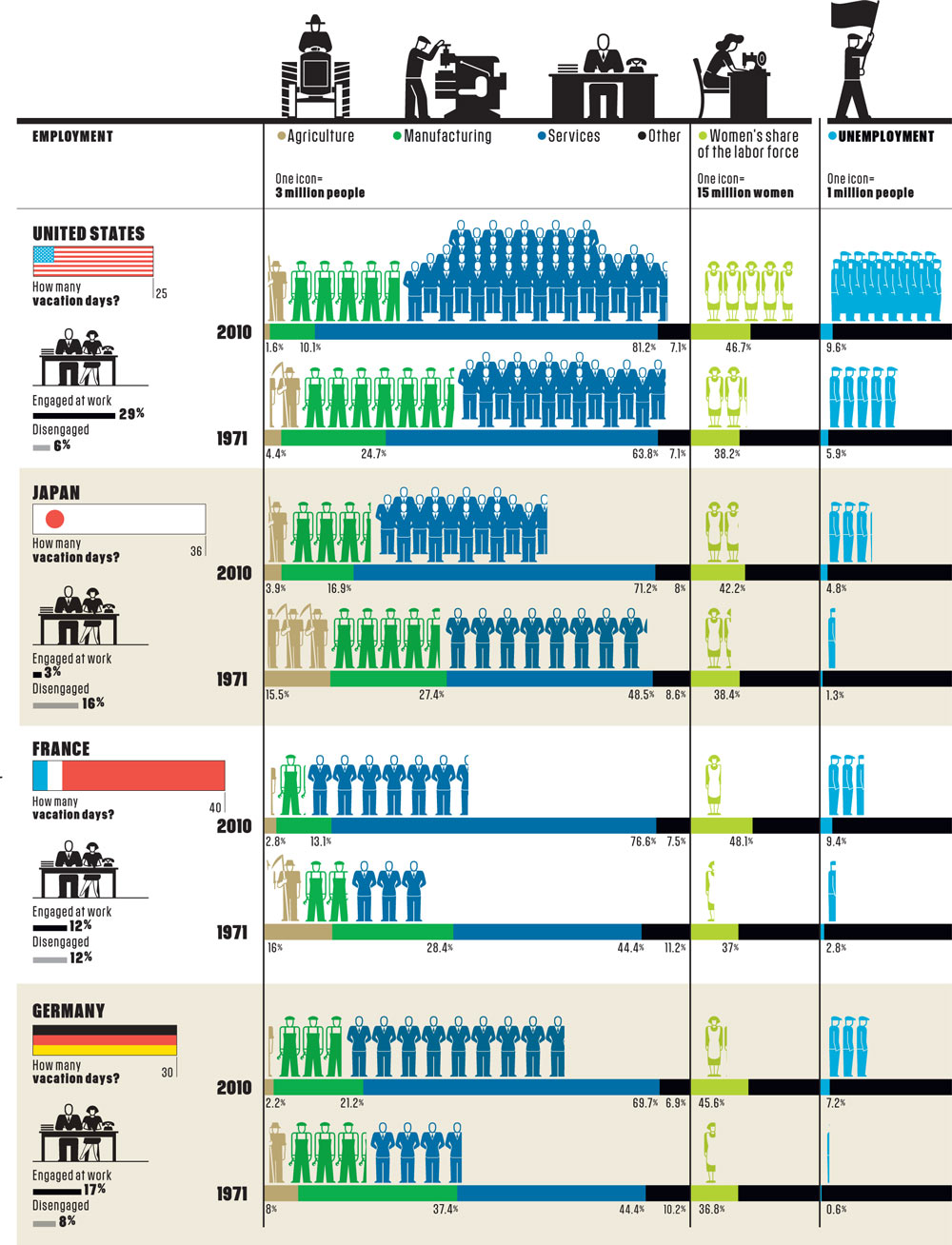
With all the hot dogs and beer, it’s easy to forget the labor part of Labor Day. Here, a look at the labor force, past and present, starting with 1971, when the microprocessor was introduced and we began our crawl away from manufacturing and toward the service-driven economy of today. | ByRachel Z. Arndt
Our new record was ‘officially’ released today. This means that you’ll find the digital version on various different Digital music stores like iTunes, AmazonMP3 and eMusic, and you’ll be able to stream the music from services such as Spotify and Deezer.
The physical versions (CD and Vinyl) are only available from our Bandcamp site and at gigs.
Unfortunately, you will not find our record in any record stores. The reason for this is because we do not have a record label, which means we have no access to distribution. Without a distributor, you cannot sell your CD’s in record stores. If you work for a distributor and you’re interested in carrying our CD or Vinyl, or both, feel free to contact us!
If you choose to purchase our music or use one of the ‘legal’ streaming services, here’s an overview of where the pennies go.
If you listen to the album all the way through, we’ll get 0.029 EUR.
If you listen to the album 10 times on Spotify, we’ll get 0.29 EUR
If you listen to it a hundred times, we’ll get 2.94 EUR
If you listen to the album 1,000 times (once a day for 3 years!) we’ll get 29.47 EUR!
If you use the free version of Spotify, it won’t cost you anything. Spotify will make money from ads. If you use any of the paid versions, we have no idea how they carve up the money. They only disclose this information to the Major record labels…
We’ve been getting 0.006 EUR/play from them. That’s 0.052 EUR/album play. If you listen to the album 10 times on Deezer, we’ll get 0.52 EUR. If you listen to it a hundred times, we’ll get 5.2 EUR. If you listen to the album 1,000 times (once a day for 3 years!) we’ll get a whopping 52 EUR!
If you use the free version of Deezer, it won’t cost you anything and Deezer will make money from the ads. If you use any of the paid versions, we have no idea how they carve up the money either.
The album will cost you 8.91 EUR to buy from Apple.
There’s a 70-30% split there too, so we will keep 6.28 EUR/album.
That being said, it costs us 35 EUR/year to keep an album on iTunes, Spotify, and Amazon (105 EUR per year for all 3 of our albums!) so we don’t make any money until 24 people have bought a digital copy of the album on iTunes, or 150 single songs, or if we get tens of thousands of listens on Spotify! In most cases, it’s actually more economically viable not to sell the music at all.
But what about if you buy the Digital version directly from us?
We allow people to pay what they want for the digital version. If you choose to pay 5 EUR, Paypal takes 0.37 EUR, Bandcamp takes 0.75 EUR. Uniform Motion keeps 3.88 EUR. it doesn’t cost us anything to have a page on bandcamp.
If you decide to pay nothing, well, we get nothing, but at least you didn’t give money indirectly to major record labels, which seems to be the case with Spotify!!
If you buy a CD, directly from us for 10 EUR, Paypal takes 0.515 EUR, Bandcamp takes 1.5 EUR. So there’s slightly less than 8 EUR left for us. But hold on a second, it costs a fair bit to make the CD.
The CD itself costs 1.2 EUR, the booklet costs about 50 cents, the CD packaging is 1.8 EUR and the sticker on the front costs 35 cents.
If you buy a 12” Vinyl from us at 15 EUR, Bandcamp takes 2.25 EUR, Paypal takes 0.646 EUR so there’s 12.10 left. The cost of the Vinyl itself is 3.06 EUR
The labels cost 1.3 EUR. For a total of 4.36 EUR
So there’s 7.75 EUR left for us.
However, we had to press 250 of these (because that’s the minimum order), so it’s very unlikely we’ll make any money on them.
We need to sell 72 copies before we break even on the vinyl edition. We’ve sold about 30 so far.
If we break even, we’ll lower the price a little bit. :)
JASON PONTIN @ technologyreview.com conducted an interesting Q/A session with Qualcomm founder Irwin Jacobs. Mr. Jacobs offered some inside details on the business side of things and provided guidance for future applications as well.
Qualcomm provided Google with the Snapdragon chip, to launch a phone that didn't require contracts with carriers. The business model didn't work. Why not? What other models might reduce the heavy weight the carriers exert upon innovation?
Google didn't press it very hard because they were then competing with other manufacturers who were making Android phones. And so between not being marketed actively and having more limited distribution and support, that model did not work. But there are certainly situations where you can buy phones retail and then sign up with an operator for the service. We'll see how that develops. There are also other models such as the one that Kindle started, and others have followed, where when you order a book using your Kindle, the information goes out over a cellular network, the book comes back over a cellular network, but you don't pay separately for it—it's just buried in the price of the book. We'll see a number of different business models, driven by competition, driven by the various applications.
What can the wireless industry do to keep up with and manage the unprecedented demands being placed on the network by the growth of mobile video?
The interest of subscribers in video became apparent in South Korea when we first launched some of the 3G services. Video on phones is just going to continue to increase. I don't think users are going to broadcast so much as want video on demand. And that does load the network down quite a bit. That's the reason we developed our MediaFLO technology [a service from Qualcomm that lets mobile carriers stream videos on cell phones]: we wanted a separate frequency band to provide a forward link that carries the videos to the phone. I suspect that additional forward-link-capacity spectrum will be made available and used to support video. The other way one gets spectrum is by having additional base stations. What we'll see is the network evolving to have more and more access points. Some may be in your home. But the spectrum's limited, so we'll have to do things such as reuse the same spectrum.
The mobile market is by no means now limited just to phones. How will Qualcomm change as tablets and other devices become increasingly common?
The key issue with these new devices will be that they'll need chips that use very little energy and provide a lot of computing power. We recognized this early on, and we set up a whole group to research the problem. That's where Snapdragon came from. Those chips were initially only in phones but are now moving up into other devices. This is an important area for Qualcomm, because I believe that tablets will probably become the major computing devices for most people.
Augmented reality has been a significant investment for Qualcomm. Why do you think that augmented reality will be such an important function on our mobile devices?
There are lots of interesting new capabilities. Say I'm in a foreign country: there's a street sign I can't read, so I hold up my phone, and it translates the sign for me. We're beginning to see other examples show up. You might do product comparisons in a shop. You could locate friends who are willing to be located when you approach an area. Since my memory is not as good as it once was, particularly for faces, one I like very much is the possibility of a phone's camera seeing a face and whispering in my ear who that person is.
Ubiquitous handsets introduce mobile payments to those who lack bank accounts.
Virtual wallet: A store in Quito, Ecuador, is one of dozens in the country testing Mony, a way for merchants and suppliers to exchange money by text message. Most Ecuadorians have cell phones but lack bank accounts and must spend time traveling to pay bills in cash.
Credit: Mony/YellowPepper
As one of the fastest-spreading technologies in history, the mobile phone has been transformative for the billions of people in the developing world who never had a landline or an Internet connection. One of the most unexpected benefits is its ability to deliver banking services.
Veronica Suarez, like some 2.5 billion other adults on the planet, has no bank account of her own. Suarez and her husband run a small grocery store in Quito, Ecuador, a city of about 1.4 million people on a plateau ringed with dormant volcanoes. In the past, she would often spend half a day traveling to pay bills in cash. But since June, she has been testing a mobile banking service called Mony, which is run by the Panama-based startup YellowPepper Holding. Now she can simply type out text messages that zap payments to the phones of the delivery men who bring cases of Coca-Cola and boxes of vegetable oil to her shop. That could enable her to save travel time, reduce the risk of getting robbed, and run her business more efficiently.
Hank Childs / Lawrence Berkeley National Laboratory
Most stars end their lives in a whimper — our own sun will almost certainly be one of them — but the most massive stars go out with an impressive bang. When that happens, creating what's known as a Type II supernova, the associated blast of energy is so brilliant that it can briefly outshine an entire galaxy, give birth to ultra-dense neutron stars or black holes, and forge atoms so heavy that even the Big Bang wasn't powerful enough to create them. If supernovas didn't exist, neither would gold, silver, platinum or uranium. The last time a supernova went off close enough to earth to be visible without a telescope, back in 1987, it made the cover of TIME.
Given the Type II supernovas' cosmic importance, you might think astronomers would have figured out how they work — and in a general way, they have. But when it comes to the most critical few moments of the detonation process, says Princeton theorist Adam Burrows, you'd be wrong. "We've been working on this for about 50 years," he explains, "but every time we think we've nailed it, the answer turns out to be ambiguous or wrong." (There's an entirely different kind of a supernova by the way, called a Type I, which astronomers don't fully understand either, but that's a different story.)
Thanks to a new, powerful supercomputer simulation, though, reported in the current Astrophysical Journal, Burrows and a group of colleagues at Princeton and Lawrence Berkeley National Laboratory, in California, are convinced they're getting closer. "We're not there yet," he says, "but victory is in sight."
As powerful as genes are in exposing clues to diseases, not even the most passionate geneticist believes that complex conditions such as depression can be reduced to a tell-tale string of DNA.
But a new study confirms earlier evidence that a particular gene, involved in ferrying a brain chemical critical to mood known as serotonin, may play a role in triggering the mental disorder in some people.
Researchers led by Dr. Srijan Sen, a professor of psychiatry at University of Michigan, report in the Archives of General Psychiatry that individuals with a particular form of the serotonin transporter gene were more vulnerable to developing depression when faced with stressful life events such as having a serious medical illness or being a victim of childhood abuse. The form of the gene that these individuals inherit prevents the mood-regulating serotonin from being re-absorbed by nerve cells in the brain. Having such a low-functioning version of the transporter starting early in life appears to set these individuals up for developing depression later on, although the exact relationship between this gene, stress, and depression isn't clear yet.
Walter Mosley is the author of more than 34 critically acclaimed books, including the major bestselling mystery series featuring the character Easy Rawlins. His work has been translated into 21 languages and includes literary fiction, science fiction, political monographs, and a young adult novel.
"A lot of people get upset at young people," says Novelist Walter Mosley, "They say, 'Young people aren’t living up to their potential. Young people are interested in things which are shallow, which are meaningless, which are unimportant. But the truth is, is that the older you are, the more you’re thinking is historical, and the more historical things become—especially in our world today, where things change so quickly because of technology, the more they’re invalid."
Aspiring writers shouldn't measure their success in dollars and cents or fame, says Mosley, but rather in their ability to entertain people with their writing. "Mark Twain, Charles Dickens, you know, Victor Hugo. I mean all of these people, they’re popular writers. They’re writing to the broadest range of people," explains Mosley. "Yeah, it’s great literature, but it was popular literature when it was written. And that’s the case with almost all of the literature that survives starting from Homer. You know? It’s the adventure; it’s the story; it’s the fight; it’s people falling in love; it’s people with deep, you know, personality disorders who succeed anyway; you know, beyond themselves. That’s what great literature is."
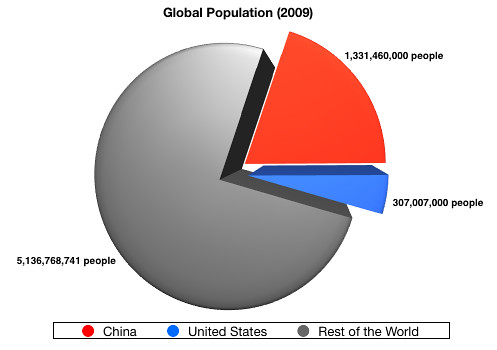
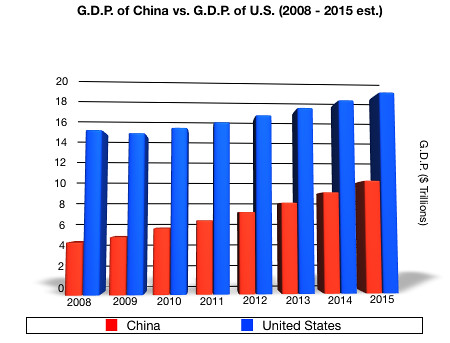
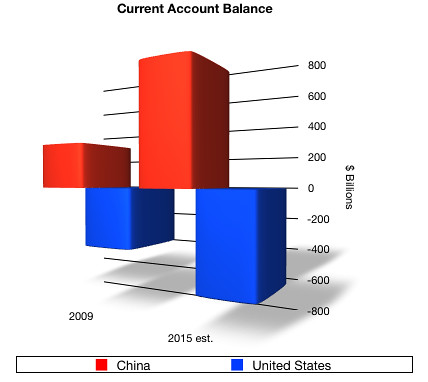
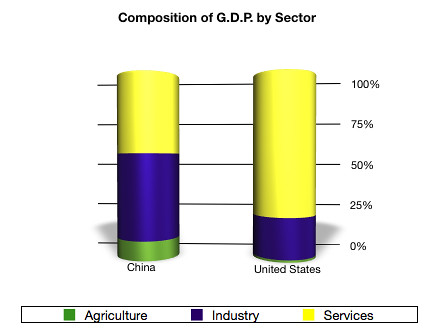
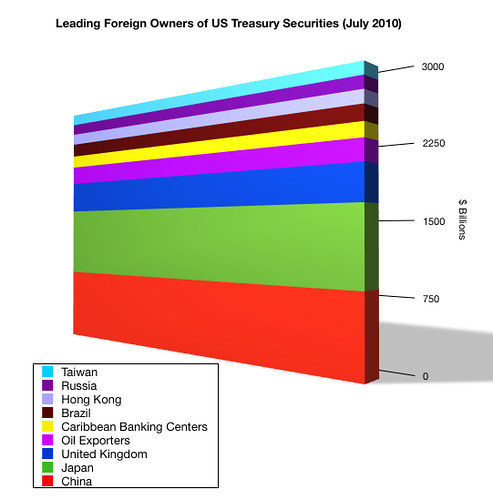
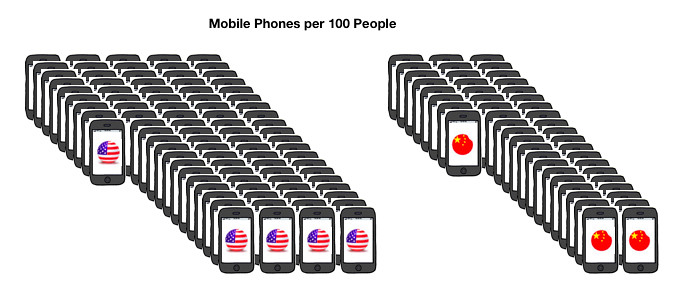
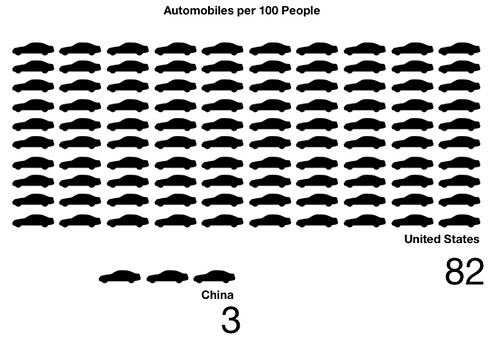
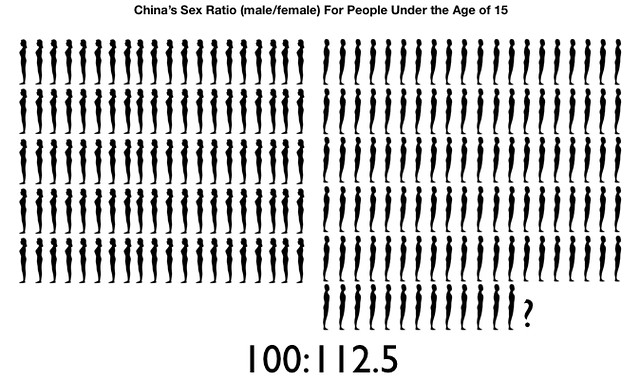
China is shaping up to be one of America's primary competitors in the future global economy. The infographics below provide an entry-level fact base for putting the growing rivalry into perspective.
Most parents already know that sugary sodas and greasy potato chips are not the healthiest food choices for children. But what about the hundreds of other widely available and kid-friendly packaged foods — pastas, frozen dinners, granola bars — that at least appear to be more wholesome?
A new Canadian study suggests that even these foods — most of which make nutritional claims on their packaging — aren't all they profess to be. University of Calgary researchers analyzed the nutritional benefit of more than 360 such products, often marketed as "fun foods," which are aimed at children either through kid-friendly package graphics or tie-ins with children's TV shows and movies. Three-quarters of these foods, for example, came in packages bearing cartoon images. Researchers did not include junk food in their analysis, but they found that nearly 90% of kid products still did not meet established nutritional standards. What's more, 62% of the foods that researchers deemed to be of "poor nutritional quality" made positive nutritional claims on the package — such as being low-fat, containing essential nutrients or being a source of calcium. "If a parent sees a product that makes specific nutritional claims, they may assume that the whole product is nutritious," says author Charlene Elliott, a communications and culture professor at the University of Calgary. "Our study has shown that that is definitely not true in the vast majority of cases."








 Virtual wallet: A store in Quito, Ecuador, is one of dozens in the country testing Mony, a way for merchants and suppliers to exchange money by text message. Most Ecuadorians have cell phones but lack bank accounts and must spend time traveling to pay bills in cash.